Technology has had a more significant impact on the world of archaeology today since it had in the last century. After technological innovations were made in laser scanning, archaeologists were able to discover a mysterious Mayan metropolis deep within the tropical forest north of Guatemala. By using laser mapping techniques that use a form of light detection and ranging technology they revealed the outline of 61, 000 ancient structures. This included pyramids, palaces and an interconnected network of cities, this was only possible thanks to the advancements and ingenuity of technology. (1) These structures point out that a large community once existed deep within jungles. They were most likely overtaken by trees due to the lack of maintenance and altogether being forgotten.
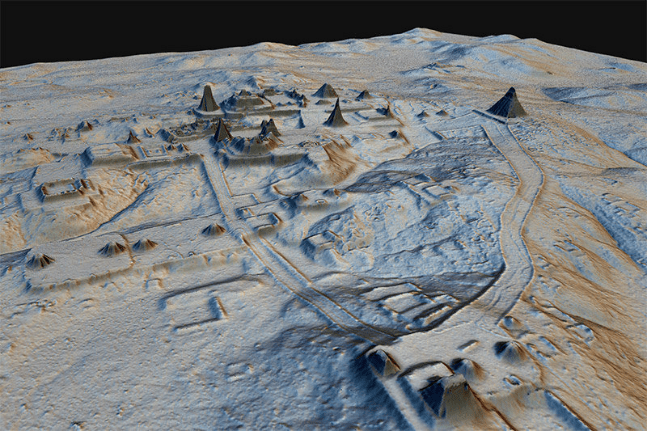
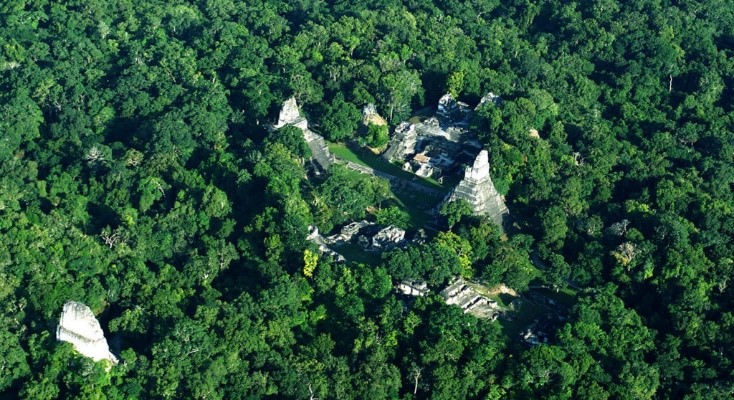
This current discovery has made it apparent that technology has not only improved but become more diverse in its uses. In addition, this conveys that archaeologists are using more diverse techniques to map and determine valuable cultural discoveries.
What do we learn from this ?
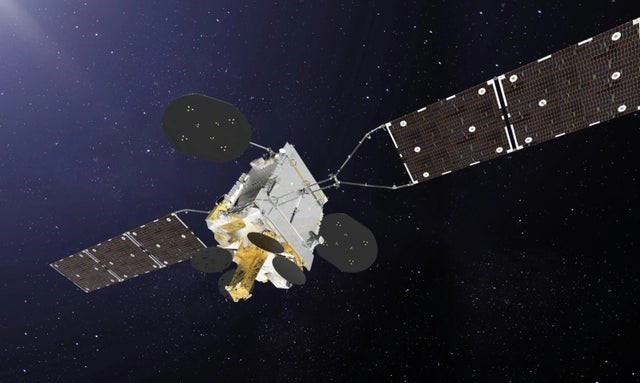
Well for one it shows how far technology has improved over the course of the 20th century and into the 21st century. Bearing in mind that innovation in science and engineering has a major influence over technology, during the 1950’s the first probes were sent into space. This later improved and became satellites that could monitor the surface of the earth and map out unforeseen areas on the planet. (2) Applying different types of crystals and radiation such as infrared light sources allowed specialist to scan large areas of interest.

Secondly the relationship between technology and archaeology has become more intertwined over the passage of time. Archaeologists have used various techniques for their findings, today’s most common technique is looking through satellite images and determining a site of interest. Others include using drones to take images of landscapes and then analysing points of interest. Another includes a group walking over certain landscapes and placing flags on objects that could be related to understanding human life. (3) In the period prior to 1990 archaeologists had 2 methods of finding sites, one is by observing landscape from high altitude from air balloons. This method required specialised people with generally good eyes to pinpoint areas of interest.
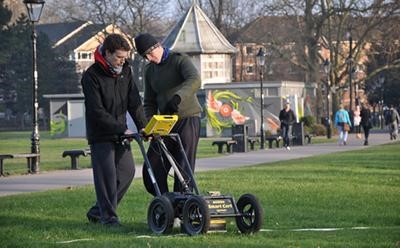
But the human eye has limitations there can be key points of interest that are completely overlooked during this process. Evidence for this is that archaeologists continue to find and excavate sites such as the Mayan metropolis. Earlier methods included digging random holes to a certain depth then analysing the surround area. This was known as shovel testing and it was not the best method of collecting data as there was no way of knowing if a dig would bring fruitful results. (4) Studying a site also means surveying the environment around the site. Geophysical techniques included using magnetometry to measure the magnetic field caused by the site or artefact. This allows archaeologists to differentiate between fissures and cracks in the earth and the full extent of a sites underground layout. (5)
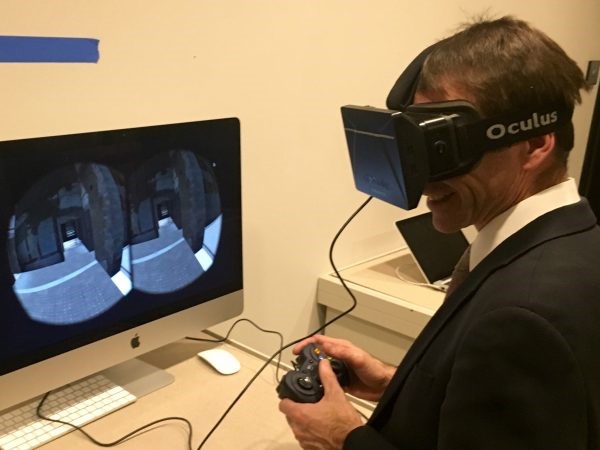
Technology has allowed archaeologists to push the limit of their research and human capabilities. In addition to making findings, technology has allowed archaeologists to recreate and analyse ruins or artefacts on a more efficient scale. Various software’s that recreate ruins from scans taken by Lidar and are restored to what they may have looked like during their height. Not only does this mean research can be conducted on an effective scale but there is room to experiment, the software allows one to edit and view the renditions in multiple ways and interact via virtual reality. (6)
The recent hidden Mayan city underwent the same process and revealed structures and irrigation system to which experts had completely overlooked. From this information, archaeologists have been able to deduce that the Mayan population was larger than previous estimates ranging from 10-15 million. A discovery such as this has opened up room for more questions such as, how did it end up in this manner? (7)
Therefore, the recent Mayan megalopolis discovery shows that not only is technology improving at a fast rate, but archaeology is adapting and utilising technology. (8)It’s amazing to think that 30 years ago archaeologists would have to draw sites or take photos. Whilst Lidar technology was made in 1960 and was first applied in meteorology but later found more applications from geographical mapping to surveying landscapes. It is clear from the hidden Mayan discovery that technology has had a beneficial impact.
Gone are the days randomly digging and hoping to find evidence to understand human civilisation. One of the main issue’s archaeologists have when finding a sight is destroying the surrounding environment which in turn can destroy the very evidence they seek. (9) The amount of time and money required to carry out excavation can be immense, once again the risk of finding no evidence can lead to a waste of time and money. The main reason the Mayan city was overlooked was the fear of destroying the environment, the only possible method of researching the city would have to cut down trees and dig around the land.(10) Then there is the amount of money required to obtain equipment and manpower to cut down trees and dig around the area. Scanning eliminates the risk of losing evidence and damaging the environment, the amount of time and money required is substantially less than physical excavations.
What does this bode for the future?
If there is one hidden city that was completely overlooked, then how many more are out there just hiding in plain sight. As technology improves it will open more paths for archaeologists to experiment and uncover more of the past. Only time will tell what the future holds but at this rate it wont be long until more secrets of the past are unveiled.
References
- Bellis, Mary ‘The History of Satellites’ 01 April 2019 <https://www.thoughtco.com/history-of-satellites-4070932>
- Coscone, Sarah ‘Discovery of a Maya Megalopolis’ 28 September 2018 <https://news.artnet.com/art-world/hidden-ancient-maya-city-discovered-lidar-1359307>
- Dormehl, Luke ‘Todays Archaeologists are putting down shovels and turning to tech’ 23 December 2017 <https://www.digitaltrends.com/cool-tech/tech-changing-archaeology/>
- Macdonald, Chenyenne ‘Stunning 3d scans reveal Mayan structures’ 27 September 2018 <https://www.dailymail.co.uk/sciencetech/article-6216505/Stunning-3-D-laser-maps-reveal-sprawling-Mayan-megalopolis-hidden-Guatemala.html>
- Strutt, Kristian ‘From Stonehenge to Neferiti’ 23 March 2016 <https://theconversation.com/from-stonehenge-to-nefertiti-how-high-tech-archaeology-is-transforming-our-view-of-history-56628>
- Villagran, Daniel ‘How do Archaeologists find sites?’ 10 Febuary 2016 <http://anthropology.msu.edu/anp203h-ss16/2016/02/10/how-do-archaeologist-find-sites/>
 Archaeology in the 21st Century